
Ten Supercars: Where the Pavement Meets the Pit Lane in 2026
The heartbeat of motorsport resonates deeply within the automotive industry, a powerful echo felt from the unforgiving crucible of the racetrack to the polished asphalt of metropolitan avenues. For decades, the visceral thrill of raw horsepower has been the signature of elite competition, yet the boundary between legendary performance and everyday accessibility is often thinner than it appears. In 2026, the market offers a rare privilege: the chance to own a vehicle where the engine pulses with the same DNA as machines that conquer Monaco and Le Mans.
This is not merely about aesthetics; it is about engineering excellence forged under the relentless pressure of elite racing. These production cars boast engines that have been honed through the crucible of competition, embodying the relentless pursuit of speed, efficiency, and reliability. More than just a badge, they represent a tangible link to the very heart of racing innovation, offering drivers a taste of that world-class adrenaline on public roads.
In this definitive guide, we explore ten production vehicles that masterfully blur the line between racetrack legends and road-legal machines. From the thunderous roar of naturally aspirated V12s to the high-tech precision of turbocharged hybrids, these cars offer a rare glimpse into the world of motorsport. But before we delve into the specific vehicles, it is essential to understand the colossal investment in automotive engineering that underpins their existence and, critically, how the hard-won lessons of the track translate into the cars we drive today.
The Investment in Motorsports: Why Manufacturers Spend Billions to Win
The symbiotic relationship between motorsport and road car development is as fundamental to the automotive world as the internal combustion engine itself. The track serves as the ultimate testing ground, a proving ground where engineering ingenuity is pushed to its absolute limits, subjecting vehicles and their components to unparalleled operational stress. The unforgiving environment of elite competition demands absolute reliability and peak performance; there is simply no margin for error when the thrill of victory hangs in the balance. The invaluable knowledge derived from these high-stakes endeavors invariably finds its way back to the design and production of the cars we utilize on a daily basis. Whether it is the implementation of sophisticated aerodynamic principles, the strategic deployment of advanced lightweight materials, or the direct trickle-down of cutting-edge engine technology, innovation forged in the heat of racing pioneers the creation of superior road-going vehicles.
For instance, consider the ubiquitous adoption of disc brakes and the modern necessity of paddle shifters; both technologies originated on the racetrack before evolving into standard features in contemporary production vehicles. Furthermore, the prestige and brand enhancement derived from motorsport success are immeasurable. When a manufacturer’s racing machine consistently dominates the competition, its road-going counterparts are perceived as inherently more desirable and capable. While the vast majority of enthusiasts will never have the privilege of piloting a Formula 1 car or a Le Mans prototype, the presence of a race-bred engine thrumming beneath the hood offers a profound sense of connection to the action, allowing us to experience a sliver of that exhilarating world.
The engineering rigor required to create vehicles capable of performing at the pinnacle of motorsport is staggering. Manufacturers invest billions of dollars annually in research and development to secure a decisive competitive edge. This colossal investment yields dividends not merely in trophies and championship titles, but also in the technological advancements that render road cars safer, faster, and more efficient. The relentless pursuit of aerodynamic efficiency, for instance, has catalyzed the development of ground-effect aerodynamics, active aerodynamic systems, and sophisticated downforce management solutions that are now commonplace in high-performance sports cars.

Similarly, the quest for lighter and stronger materials has pushed the boundaries of materials science. The pervasive use of carbon fiber reinforced polymers (CFRP), titanium alloys, and advanced aluminum alloys in motorsport has paved the way for their integration into production cars, resulting in lighter, more rigid, and more responsive vehicles. The evolution of advanced chassis dynamics and suspension systems, honed through countless hours of testing on iconic circuits such as the Nürburgring and Le Mans, has led to the creation of modern sports cars boasting exceptional handling and ride quality.
The transmission technology utilized in high-performance cars has also benefited immensely from motorsport applications. The development of dual-clutch transmissions (DCTs), paddle shifters, and automated manual transmissions (AMTs) was driven by the imperative for faster gear changes and enhanced driver engagement on the track. These technologies have since migrated to production cars, offering a confluence of performance and convenience that was once unimaginable. Even engine control unit (ECU) technology has advanced rapidly, with motorsport applications pushing the limits of fuel injection, timing, and boost control, culminating in more powerful and efficient engines in production vehicles.
The financial investment in motorsport is substantial, with manufacturers facing costs that routinely reach hundreds of millions of dollars per season. This investment is justified by the returns in terms of brand recognition, technological development, and market differentiation. For supercar manufacturers, motorsport is not merely a marketing tool; it is an integral component of their brand identity. The association with racing cultivates a perception of exclusivity, performance, and prestige that sets them apart from other luxury car brands. This distinction has empowered companies such as Ferrari, Porsche, and McLaren to command premium prices for their road cars, despite the high development costs.
The Investment in Motorsport: When the Competition Pays for Itself
The return on investment (ROI) for motorsport is often measured in long-term brand equity rather than immediate sales. A win at the 24 Hours of Le Mans can elevate a brand’s reputation for years to come, creating a halo effect that benefits the entire product line. This is particularly true for brands that compete in prestigious series like Formula 1, NASCAR, and endurance racing, where visibility and media exposure are paramount. The strategic alignment of motorsport programs with product development cycles is also crucial. Manufacturers often choose racing series that align with their target markets and product lines. For example, brands that compete in rally racing often focus on off-road vehicles and SUVs, while brands that compete in GT racing often focus on sports cars and supercars. This strategic alignment ensures that the marketing and technological benefits of motorsport are effectively leveraged to support the brand’s overall business objectives.
Strategic Investment: Where the Marketing Power Lies
The strategic alignment of motorsport programs with product development cycles is also crucial. Manufacturers often choose racing series that align with their target markets and product lines. For example, brands that compete in rally racing often focus on off-road vehicles and SUVs, while brands that compete in GT racing often focus on sports cars and supercars. This strategic alignment ensures that the marketing and technological benefits of motorsport are effectively leveraged to support the brand’s overall business objectives.
The transmission technology in high-performance cars has also benefited immensely from motorsport. The development of dual-clutch transmissions (DCTs), paddle shifters, and automated manual transmissions (AMTs) was driven by the need for faster gear changes and improved driver engagement on the track. These technologies have since migrated to production cars, offering a blend of performance and convenience that was once unimaginable. Even engine control unit (ECU) technology has evolved rapidly, with motorsport applications pushing the limits of fuel injection, timing, and boost control, leading to more powerful and efficient engines in production vehicles.

The Legacy of Racing in Today’s Road Cars: Ten Masterpieces
The legacy of motorsport is not just theoretical; it is deeply etched into the specifications of today’s most sought-after production cars. From 2016 to 2026, automotive engineers have successfully translated the lessons learned from countless hours of rigorous track testing into vehicles that are faster, more reliable, and more dynamically refined than ever before. These machines are not mere simulations of race cars; they are the authentic road-going descendants of vehicles that have conquered the world’s most prestigious competitions.
To truly appreciate the significance of these vehicles, we must look at how manufacturers have leveraged the relentless pressure of racing to drive innovation in engine design, materials science, and chassis dynamics. The demand for lighter, stronger, and more efficient vehicles has pushed boundaries in every automotive discipline, and the most exciting innovations have always come from the racetrack. The following ten automobiles represent the pinnacle of this fusion—production cars powered by genuine motorsport-derived engines, offering enthusiasts a rare opportunity to experience the thrill of elite competition in a road-legal package.
Ferrari 488 GT3 / F8 Tributo (road-going version)
The Ferrari 488 GT3 is a formidable competitor in the GT3 racing class, a discipline that demands extreme performance, aerodynamic efficiency, and unwavering reliability. It is powered by the 3.9-liter twin-turbocharged V8 engine, which traces its roots back to Ferrari’s road-going 488 GTB and the subsequent F8 Tributo. This V8 is a technological masterpiece, delivering over 700 horsepower in its road-legal specification.
Engineering Focus: The primary focus of the 488 GT3 engine development was on boosting power, optimizing airflow, and ensuring thermal stability under extreme track conditions. The road car inherits many of these enhancements, resulting in a car that feels incredibly responsive and provides a visceral connection to its racing counterpart. The cost of this engine technology is evident in the vehicle’s premium price tag, but the performance gains justify the investment for those who crave the ultimate driving experience.
Financial Implication: For collectors and enthusiasts, owning a car with this kind of heritage adds a significant premium to its resale value. Ferrari’s success in GT3 racing solidifies the brand’s reputation, driving demand for both race cars and their road-going equivalents.
Porsche 911 GT3 / GT3 RS (992 generation)
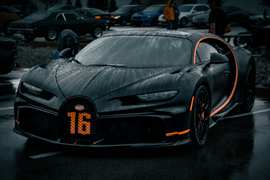
The Porsche 911 GT3