
The Best Production Cars with True Motorsport Engines
For decades, the allure of racing prowess has captivated automotive enthusiasts. The thrill of piloting a road vehicle powered by a genuine motorsport engine is unmatched—these aren’t just aesthetic upgrades; they are powerhouses developed in elite competition, offering a tangible connection to the speed and precision of the racetrack.
In the realm of high-end sports cars, the difference between a standard production engine and one derived from racing is profound. Cars featuring motorsport powerplants leverage technology refined under the most extreme conditions, delivering unparalleled performance, durability, and emotional engagement. This article explores ten production cars that embody this philosophy, bridging the gap between high-octane competition and public roads.
Furthermore, understanding why automotive manufacturers invest astronomical amounts in racing is crucial. The lessons learned on the track consistently translate into technological advancements that make road cars safer, faster, and more efficient.
The Symbiotic Relationship: Motorsport DNA in Road Cars
The history of motorsport and road car development is inseparable. Racing serves as the ultimate proving ground, testing engineering ingenuity to its limits and subjecting vehicles and components to relentless stress. In competition, there is no room for error; victory hinges on reliability and peak performance. The knowledge gained from these high-stakes endeavors invariably migrates into production cars. From advanced aerodynamic principles and lightweight materials to direct engine technology transfers, innovation forged on the track pioneers superior road vehicles.
Technologies like disc brakes and paddle shifters are prime examples. Both originated on the racetrack before becoming standard in contemporary production vehicles. Additionally, the brand prestige derived from motorsport success is immeasurable. When a manufacturer’s racing machine consistently dominates the competition, its road-going counterparts are perceived as inherently more desirable and capable. While most enthusiasts may never drive a Formula 1 car or Le Mans prototype, possessing a race-bred engine offers a profound sense of connection to the sport.
Why Invest Billions in Racing?
The engineering excellence required to build world-class racing vehicles is astronomical. Manufacturers invest billions of dollars annually in research and development to gain a competitive edge. This investment generates returns not just through trophies and championships, but also through technological advancements that enhance road cars.
Technological Advancements and Market Differentiation
The pursuit of aerodynamic efficiency, for example, has driven the development of ground-effect aerodynamics, active aero systems, and advanced downforce management solutions now common in high-performance sports cars.
Similarly, the quest for lighter, stronger materials has pushed the boundaries of materials science. The widespread use of carbon fiber reinforced polymers (CFRP), titanium alloys, and advanced aluminum alloys in motorsport has paved the way for their integration into production cars, resulting in lighter, more rigid, and more responsive vehicles. The development of advanced chassis dynamics and suspension systems, honed on circuits like the Nürburgring and Le Mans, has led to modern sports cars with exceptional handling and ride quality.

Transmission technology has also benefited immensely from motorsport. The development of dual-clutch transmissions (DCTs), paddle shifters, and automated manual transmissions (AMTs) was driven by the need for faster gear changes and improved driver engagement on the track. These technologies now offer a blend of performance and convenience previously unimaginable. Even engine control unit (ECU) technology has advanced rapidly, with motorsport applications pushing the boundaries of fuel injection, ignition timing, and boost control, leading to more powerful and efficient engines in production vehicles.
The Financial Investment: ROI in Motorsport
The financial commitment to motorsport is substantial, with manufacturers often spending hundreds of millions of dollars per season. This investment is justified by the returns in brand recognition, technological development, and market differentiation. For supercar manufacturers, motorsport is integral to brand identity. Associating with racing creates a perception of exclusivity, performance, and prestige, setting these brands apart. This allows companies like Ferrari, Porsche, and McLaren to command premium pricing for their road cars, despite high development costs.
The return on investment (ROI) in motorsport is often measured in long-term brand equity rather than immediate sales. A win at the 24 Hours of Le Mans can elevate a brand’s reputation for years, creating a halo effect that benefits the entire product line. This is particularly true for brands competing in prestigious series like Formula 1, NASCAR, and endurance racing, where visibility and media exposure are paramount.
The Transfer of Technology: From Track to Driveway
The transfer of technology from motorsport to production cars is continuous. Engineers from racing teams collaborate closely with road car divisions, ensuring lessons learned on the track are integrated into the production process. This collaboration fosters innovation and continuous improvement, allowing manufacturers to remain at the forefront of technological advancement.
The strategic alignment of motorsport programs with product development cycles is crucial. Manufacturers often select racing series that match their target markets and product lines. Brands in rally racing, for example, often focus on off-road vehicles and SUVs, while GT racing brands typically focus on sports cars and supercars. This alignment ensures the marketing and technological benefits of motorsport support the brand’s overall business objectives.
Impact of Racing: Performance and Durability
In the competitive realm of high-end sports cars, a race-bred engine represents a fundamental difference in engineering philosophy. These engines are designed with fewer compromises for fuel efficiency or emissions, prioritizing low weight, high revs, and sustained high-stress performance. Internal components typically utilize higher-grade materials—titanium valves, forged pistons, and reinforced connecting rods—able to withstand extreme temperatures and rotational forces far exceeding those in standard road engines. Race cars operate at significantly higher average RPMs than street cars, requiring inherently balanced, vibration-resistant engine architecture.
This engineering pedigree translates into tangible performance benefits. Pressing the throttle in a race-derived supercar yields sharp engine response, near-instantaneous torque delivery, and a linear power band that pulls strongly to the redline. High-revving engines also often produce more exciting exhaust notes, a critical element of the emotional ownership experience.
Beyond pure performance, lessons from racing drive innovation in durability and safety. When engineers design a race engine, they push it to its limits during testing, often uncovering weak points or failure modes that would never surface in everyday driving. This means cars using these technologies are often more reliable in the long run, even under hard use. Advanced cooling systems, dry-sump lubrication, and sophisticated engine management—all born from motorsport requirements—provide superior temperature regulation and lubrication, leading to longer engine life and better performance retention over time.
Top 10 Production Cars Featuring True Motorsport Powerplants
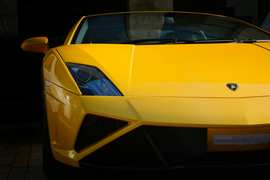
This list showcases ten production vehicles that house engines directly descended from elite racing programs, offering performance that echoes the racetrack.
Ferrari 296 GTB (with Ferrari’s 296 GT3 Engine)
The Ferrari 296 GTB represents a remarkable technological leap for the Prancing Horse. Instead of the V12s of its predecessors, the 296 utilizes a revolutionary 3.0L twin-turbocharged V6 hybrid powertrain. This configuration is a direct echo of the engine powering the 296 GT3 race car, which competes successfully in endurance racing and GT championships worldwide.
Engineering Insight: The GT3 version employs a highly tuned twin-turbo V6, optimized for high sustained performance and reliability. While the road car features a hybrid system to enhance efficiency and torque delivery, the V6 core is pure racing DNA, delivering breathtaking responsiveness and a soundtrack that belies its size. The thermal management requirements for endurance racing necessitated significant engineering to ensure the engine can operate at high load for extended periods, a philosophy directly influencing the GTB’s performance profile.
What This Means for You: This car offers a unique blend of Ferrari’s legendary heritage with cutting-edge hybrid technology. The direct link to the 296 GT3 ensures peak performance, while the electrification adds torque and daily usability. As a supercar investment, cars with hybrid powertrains that mirror racing technology often hold strong residual value due to their technological exclusivity.
Porsche 911 GT3 (GT3 Cup Engine)
The Porsche 911 GT3 is perhaps the most direct example of a production car with a pure motorsport engine. The engine in the road-going 911 GT3 is almost identical to the one found in the 911 GT3 Cup race car, offering true motorsport-level performance with enhanced compliance for road use.
Engineering Insight: Both engines are naturally aspirated 4.0L flat-six units. However, the GT3 Cup version is optimized for reliability and sustained high-RPM performance in racing. The focus on lightweight construction and a screaming redline (often exceeding 9,000 RPM) is a direct inheritance from Porsche’s long history in Porsche Carrera Cup racing. This engine is not merely a “detuned” version; it is a highly specialized unit proven under extreme racing conditions.
What This Means for You: The 911 GT3 offers an unparalleled connection to Porsche’s winning racing heritage. For enthusiasts seeking the purest driving experience, this car provides visceral feedback and thrilling high-revving performance. As a real estate investment, high-performance cars like the Porsche 911 GT3 often appreciate in value, especially limited-edition models.
Lamborghini Countach LPI 800-4 (V12 Hybrid Based on Super Trofeo)
The modern Lamborghini Countach LPI 800-4 pays homage to its legendary namesake with a powertrain that owes its roots to Lamborghini’s racing programs. This limited-edition hypercar features a 6.5-liter naturally aspirated V12 engine derived from the same lineage as the Super Trofeo engines used in the Lamborghini Super Trofeo series.

Engineering Insight: The Super Trofeo race car utilizes a highly optimized version of Lamborghini’s 6.5L