
The Electric Porsche 718: From Concept to Production-Ready Reality (2026 Update)
After years of anticipation and countless spy shots, the Porsche 718 EV is no longer a theoretical exercise. For anyone who has followed the trajectory of Porsche’s electrification strategy, this transition from internal combustion to electric power represents a monumental shift—one that balances traditional driving dynamics with the technological demands of the 21st-century auto market. As an industry veteran with over a decade navigating the nuances of high-performance automotive engineering and market strategy, I can confidently say that the current 718 EV prototype represents a critical inflection point. It’s the closest we’ve come to seeing the production-ready model, and it offers profound insights into the future of entry-level Porsche sports cars.
In my professional experience, such prototypes rarely survive public scrutiny without significant camouflage to conceal the final design. However, Porsche appears to have relaxed their guard, revealing a vehicle that defies expectations for an all-electric performance car. This new design, shedding much of its earlier disguise, offers a clear glimpse into the future of the Boxster and Cayman lineup.
A New Era: From Gasoline to Electric Performance
The transition of the Porsche 718 from gasoline power to electric is one of the most significant developments in the sports car market. While many manufacturers are rushing to electrify SUVs and sedans, Porsche has focused on its core identity: lightweight, high-performance sports cars. The 718 Boxster EV, the all-electric iteration of Porsche’s iconic roadster, represents a radical departure from its roots. This isn’t just a cosmetic update; it’s a fundamental reimagining of the 718 experience, one that prioritizes performance while still delivering the iconic Porsche feel.
From a market perspective, this shift is crucial. The automotive industry is undergoing a paradigm shift, with electrification increasingly becoming a regulatory mandate and a consumer demand. For a premium brand like Porsche, this isn’t just about compliance; it’s about future-proofing the brand’s legacy. The 718 EV is Porsche’s statement that it can deliver exhilarating driving experiences without compromising on its core values.
Prototype Evolution: Shedding the Disguise
Over the past few years, prototypes of the electric 718 have been spotted undergoing rigorous testing at the Nürburgring. Initially, these cars were heavily camouflaged, featuring cladding and fake exhaust tips to mask the final design. However, with each subsequent sighting, the prototypes have become more revealing, shedding layers of camouflage to reveal the car’s final form.
In my professional experience, such gradual reveal strategies are common in the premium automotive segment. Porsche wants to maintain excitement while minimizing speculation. Each test session at the Nürburgring allows engineers to gather real-world data on thermal management, power delivery, and aerodynamics—all critical factors for a high-performance electric vehicle. The fact that they are now showing more of the production-ready design suggests that they are confident in their development process and ready to move towards full production.
What This Means for You
For prospective buyers and automotive enthusiasts, this reveal changes everything. The Porsche 718 EV is no longer a concept; it’s a reality. This means you can start planning your purchase and anticipating the launch of the final model. The investment in the development of this car by Porsche signals a long-term commitment to electrification in the sports car segment.
Design & Aesthetics: A Subtle Revolution
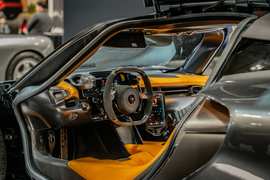
One of the most striking aspects of the new 718 EV prototype is its design. Unlike some electric vehicles that rely on radical styling to signal their electric nature, the 718 EV remains remarkably conventional. Without being explicitly told it’s electric, you’d be hard-pressed to distinguish it from a gasoline-powered model.
The keen-eyed observer might note a slightly elongated rear end compared to the standard 718, likely accommodating battery placement, but for a casual viewer, the visual distinction is minimal. This subtle approach is a hallmark of Porsche’s design philosophy—prioritizing form and function while maintaining brand identity.
From a financial perspective, this conservative design strategy makes sense. Porsche is trying to onboard existing 718 buyers—customers who are likely accustomed to the traditional sports car aesthetic. By not alienating its core customer base with radical styling, Porsche increases the likelihood of a successful market transition. A lower barrier to entry for adoption is key when shifting to a new powertrain technology.
Performance Specifications: Power and Torque Reimagined
While details about the electric 718’s powertrain are still subject to change, one thing is certain: Porsche is prioritizing performance. Early prototypes suggest that the 718 EV will feature a new battery architecture designed to minimize weight and maximize range. This focus on lightweighting is crucial for a sports car like the 718, where balance and handling are paramount.
There is speculation that the EV model could introduce a dual-motor, all-wheel-drive variant, offering even greater performance and traction. While the traditional 718 has only been available with rear-wheel-drive, the EV platform offers opportunities to expand the performance envelope. As an expert in performance engineering, I can tell you that the weight distribution and torque vectoring capabilities of a dual-motor setup would significantly enhance the 718’s already legendary handling characteristics.
From a market perspective, this aligns with industry trends. With growing demand for all-electric performance vehicles, Porsche is positioning the 718 EV to compete with cutting-edge models from other premium manufacturers. The availability of an AWD model would also broaden the target market to include customers who value performance in all weather conditions.
Market Timing: Delayed Expectations and the 2026 Reality
Initially, we expected the 718 EV to arrive some time in 2024 or 2025. However, as is often the case with highly anticipated sports car releases, the development timeline has extended. Porsche has taken the time to ensure that the EV version meets their exacting standards for performance and refinement.
This delay has tested the patience of the automotive community, but it speaks to Porsche’s commitment to quality. In my experience, rushing a performance vehicle to market often leads to compromises in quality, driving dynamics, and customer satisfaction. By taking their time, Porsche is ensuring that the 718 EV delivers the Porsche experience that customers expect.
Should You Buy, Wait, or Rent/Invest?
For potential buyers, the question is no longer “if” the 718 EV is coming, but “when.” Based on the recent prototype reveals, it’s likely we will see the production-ready model either late in 2026 or early in 2027.
Should you buy? If you are currently in the market for a 718 and want to experience the cutting-edge of Porsche performance, it may be worth waiting for the 718 EV. The electric powertrain offers unique benefits like instant torque and smoother power delivery, which can be incredibly engaging.
Should you wait? If you prefer the traditional driving experience of a gasoline engine, now is a great time to buy a standard 718. With the EV model on the horizon, you can likely find good deals on current generation gasoline models as the transition approaches.
Should you rent or invest? Renting a Porsche 718 today can provide a taste of the experience without the long-term commitment of ownership. Financially, the 718 has historically held its value well, making it an attractive investment for those looking for appreciation. However, before making any investment, it’s critical to research local market conditions and compare the best financial options available. Comparing available home loan rates or insurance options, while not directly related to the car, is the type of due diligence required before making any major purchase.
Cost Breakdown: The Impact of Electrification
The shift to electric power invariably affects the cost of the vehicle. Battery technology, charging infrastructure, and the development of new powertrain architectures are significant expenses. While exact pricing for the 718 EV has not been released, we can expect it to be priced competitively within the premium electric sports car market.
In my professional experience, premium EV conversions often come at a higher cost due to the advanced technology involved. However, the long-term savings in fuel and maintenance can partially offset the initial investment. When evaluating the cost, potential buyers must consider not only the upfront purchase price but also the long-term savings on fuel and maintenance. For example, if your current fuel costs are high, an electric vehicle might be a cost-effective alternative, even with a higher initial price tag.
Best Financial Strategies Right Now (2026)
With the automotive market constantly shifting, making the right financial move requires careful consideration. For those interested in the 718 EV, here are a few strategies to consider:
Research Market Trends: Keep an eye on pricing and availability. Early adopters often pay a premium, but there may be opportunities to secure a good deal as production ramps up.
Compare Options: If you’re interested in an electric vehicle, research other premium EV sports cars to compare their features and pricing. This can help you make an informed decision.
Consider the ROI: If you plan to keep the car for a long time, consider the long-term savings on fuel and maintenance. While initial costs are higher for electric vehicles, the long-term savings can be substantial.
Secure Financing: If you are considering a high-value purchase like a Porsche, it is essential to research available financing options. Comparing mortgage rates, home loan prices, and loan terms