
Racing’s Final Frontier: 10 Road Cars Powered by Authentic Motorsport Engines
The guttural crescendo of a V12 engine under full throttle. The mechanical ballet of a sequential gearbox shifting gears in milliseconds. The visceral connection to the asphalt that only a race-bred chassis can provide. This isn’t the dream of professional racers alone; it’s the reality offered by a select cadre of production automobiles that truly bridge the chasm between asphalt circuits and public roads. For enthusiasts seeking the absolute pinnacle of engineering distilled from competition, cars housing genuine motorsport powerplants represent the ultimate conquest.
The desire for these machines runs deep. They are more than just high-performance cars; they are living testaments to victory, forged in the crucible of elite racing and refined by the relentless pursuit of speed and dominance. But before we journey through the ten titans that embody this legacy, it is imperative to understand why automotive giants invest billions in the demanding arena of motorsport. How do those hard-won lessons translate into the vehicles that grace our driveways in 2026?
The symbiotic marriage of motorsport and road-going vehicles is a saga as ancient as the automobile itself. The racetrack serves as the ultimate proving ground, subjecting every component to stresses that road cars rarely encounter. Victory hinges on reliability and peak performance; there is simply no room for failure when the checkered flag is on the line. The invaluable intelligence gleaned from these high-stakes endeavors inevitably trickles down, revolutionizing the design and production of the cars we use every day. From cutting-edge aerodynamics to advanced lightweight materials and the direct transfer of engine technology, innovation forged in the heat of racing paves the way for superior production vehicles.
Consider the legacy: disc brakes and paddle shifters both started their journeys on the track before becoming standard features in contemporary road cars. Furthermore, the prestige derived from motorsport success is immeasurable. When a manufacturer’s racing machine consistently dominates the competition, its road-going counterparts are perceived as inherently more capable and desirable. While the vast majority of enthusiasts will never pilot a Formula 1 car or a Le Mans prototype, the presence of a race-bred engine thrumming beneath the hood offers a profound sense of connection to the action, allowing us to experience a sliver of that exhilarating world firsthand.
The Engineering Investment: Driving Innovation at the Limit
The engineering excellence required to create vehicles that perform at the highest levels of motorsport is astronomical. In the 2026 landscape, manufacturers invest billions of dollars annually in research and development to gain a competitive edge. This investment pays dividends not just in trophies and championship wins, but also in the technological advancements that make road cars safer, faster, and more efficient. The pursuit of aerodynamic efficiency, for example, has led to the development of ground-effect aerodynamics, active aerodynamics, and advanced downforce management systems that are now common in high-performance sports cars.
Similarly, the quest for lighter and stronger materials has pushed the boundaries of materials science. The widespread use of carbon fiber reinforced polymers (CFRP), titanium alloys, and advanced aluminum alloys in motorsport has paved the way for their integration into production cars, resulting in lighter, more rigid, and more responsive vehicles. The development of advanced chassis dynamics and suspension systems, honed through countless hours of testing on circuits like the Nürburgring and Le Mans, has led to the creation of modern sports cars with exceptional handling and ride quality.
The transmission technology in high-performance cars has also benefited immensely from motorsport. The development of dual-clutch transmissions (DCTs), paddle shifters, and automated manual transmissions (AMTs) was driven by the need for faster gear changes and improved driver engagement on the track. These technologies have since migrated to production cars, offering a blend of performance and convenience that was once unimaginable. Even engine control unit (ECU) technology has evolved rapidly, with motorsport applications pushing the boundaries of fuel injection, ignition timing, and boost control, leading to more powerful and efficient engines in production vehicles.
The Financial Investment: A High-Stakes Gamble on Prestige
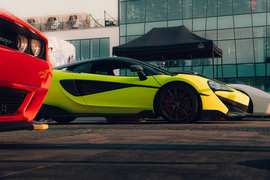
The financial investment in motorsport is substantial, with manufacturers facing costs that often run into the hundreds of millions of dollars per season. This investment is justified by the returns in terms of brand recognition, technological development, and market differentiation. For supercar manufacturers, motorsport is not just a marketing tool; it is an integral part of their brand identity. The association with racing creates a perception of exclusivity, performance, and prestige that sets them apart from other luxury car brands. This has allowed companies like Ferrari, Porsche, and McLaren to command premium prices for their road cars, despite the high development costs.
The return on investment (ROI) for motorsport is often measured in long-term brand equity rather than immediate sales. A win at the 24 Hours of Le Mans can elevate a brand’s reputation for years to come, creating a halo effect that benefits the entire product line. This is particularly true for brands that compete in prestigious series like Formula 1, NASCAR, and endurance racing, where visibility and media exposure are paramount.
For automotive manufacturers, the financial risks of motorsport are significant. Competition is fierce, and success is not guaranteed. Companies must invest heavily in research and development, testing, and personnel, all while navigating a volatile market and rapidly evolving regulations. The cost of building and campaigning a top-tier racing program can exceed half a billion dollars annually, making it one of the most expensive marketing endeavors in the automotive world.
But what happens when a manufacturer pours millions of dollars into motorsport and fails to achieve its goals? The consequences can be dire. A string of losses can erode brand prestige, alienate fans, and ultimately impact sales. This financial pressure is what drives every engineering decision in motorsport, from the smallest component to the overall vehicle concept.
The Transfer of Technology: From Track to Driveway
The transfer of technology from motorsport to production cars is a continuous process. Engineers from racing teams often work closely with their counterparts in the road car division to ensure that the lessons learned on the track are effectively integrated into the production process. This collaboration fosters a culture of innovation and continuous improvement, allowing manufacturers to stay at the forefront of technological advancement.
The strategic alignment of motorsport programs with product development cycles is also crucial. Manufacturers often choose racing series that align with their target markets and product lines. For example, brands that compete in rally racing often focus on off-road vehicles and SUVs, while brands that compete in GT racing often focus on sports cars and supercars. This strategic alignment ensures that the marketing and technological benefits of motorsport are effectively leveraged to support the brand’s overall business objectives.
In the 2026 market, as electric vehicle technology rapidly advances, manufacturers are leveraging motorsport to push the boundaries of EV performance. The electric powertrains used in Formula E and hybrid prototypes provide invaluable data on battery management, thermal management, and energy recuperation systems. These technologies are being directly applied to production electric vehicles, resulting in longer ranges, faster charging times, and more responsive performance. This demonstrates that motorsport remains a vital engine of innovation, even as the automotive industry undergoes a historic transformation.
Top 10 Production Cars with Genuine Motorsport Powerplants
Now that we understand the driving forces behind motorsport engineering, let us explore the ten production cars that represent the ultimate expression of this legacy. These vehicles feature engines designed and perfected on the racetrack, offering a tangible taste of racing pedigree to the road-going driver.
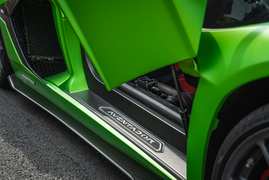
Ferrari 296 GTB
Ferrari’s 296 GTB is a masterclass in hybrid performance, a direct descendant of the 296 GT3 race car. This plug-in hybrid V6 produces a combined 819 horsepower, delivering electrifying acceleration that pushes the boundaries of what a road car can achieve. The lightweight chassis and advanced aerodynamics make it a formidable weapon on the track and a dream to drive on public roads.
What This Means for You: The 296 GTB offers a glimpse into the future of high-performance driving. With its electric motor and V6 engine working in perfect harmony, it delivers instant torque and breathtaking acceleration without compromising on fuel efficiency. For collectors and enthusiasts, this car represents a piece of racing history that you can own today.
Porsche 911 GT3 RS
The 911 GT3 RS is arguably the benchmark for production race cars. With its high-revving flat-six engine and advanced aerodynamic package, it is built for the racetrack. The GT3 RS is a precision instrument, offering unmatched handling and driver engagement. It is a car that rewards skill and precision, pushing the limits of what is possible on the road and track.
What This Means for You: The GT3 RS is an excellent choice for drivers who want a true race car experience without the hassle of owning a dedicated race vehicle. It is expensive, but it offers an unparalleled driving experience that is worth every penny.
McLaren P1
While the P1 is no longer in production, its legacy continues to inspire. This plug-in hybrid supercar was a direct competitor to the Ferrari 296 GTB and the Porsche 911 GT3 RS. With its stunning design and blistering performance, the P1 remains one of the most sought-after hypercars on the planet.
What This Means for You: The P1 is a symbol of what happens when engineers are given the freedom to create the ultimate driving machine. It is a testament to what is possible when the pursuit of performance is the only priority.
Aston Martin Valkyrie
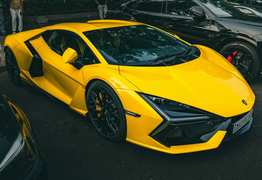
The Valkyrie is a hypercar that defies description. It is a collaboration between Aston Martin and Red Bull Racing, resulting in a car that is truly one of a kind. The Valkyrie features a naturally aspirated V12 engine that produces over 1,000 horsepower, making it one of the most powerful production cars ever built.